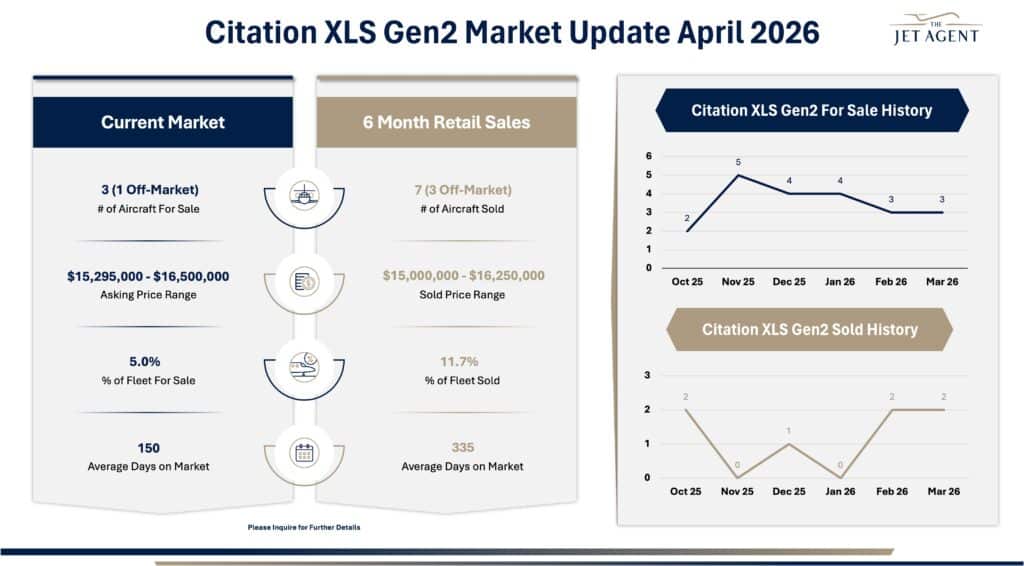
Data as of April 13, 2026
The Citation XLS Gen2 market remains extremely supply-constrained, with limited transaction data but clear signals of continued demand for newer, highly pedigreed aircraft—tempered slightly by emerging macro uncertainty.
Fleet Size and Availability
There are currently just 3 aircraft for sale (1 off-market), representing 5.0% of the fleet.
This is a thin and highly sensitive inventory environment, where even a single new listing can materially impact perceived supply. Over the past two weeks, we have observed additional aircraft quietly entering consideration for sale, suggesting that inventory may begin to build modestly from these very low levels.
Market Listings
The current asking price range is $15,295,000 to $16,500,000.
Pricing remains firm and tightly grouped, reflecting the relatively narrow age range and consistent configuration of the Gen2 fleet. Buyers in this segment are highly focused on total time, maintenance pedigree, and program coverage, with minimal tolerance for compromise given the premium positioning of the aircraft.
Sales Activity
Over the past six months, 7 aircraft have sold (3 off-market), with a sold price range of $15,000,000 to $16,250,000.
While overall transaction volume is limited, the data indicates steady absorption when aircraft become available. However, the 335-day average days on market for sold aircraft reflects the reality that many transactions in this segment are relationship-driven and often occur off-market or with extended negotiation timelines. Current listings are averaging 150 days on market, suggesting more recent offerings are being evaluated more efficiently.
Key Takeaways
• Inventory remains extremely limited but showing early signs of expansion
• Pricing is stable and tightly clustered at the top of the segment
• Transactions are infrequent but consistent when supply appears
• A large portion of activity is off-market or relationship-driven
• Buyer behavior has become more measured in recent weeks
Key Insight
The XLS Gen2 market continues to operate as a relationship-driven, low-liquidity segment, where access often matters more than availability. While underlying demand remains strong, the combination of incrementally increasing supply and broader market uncertainty is beginning to slow decision-making timelines. In this environment, sellers should expect targeted, well-informed buyers rather than broad competition, reinforcing the importance of strategic positioning and controlled marketing execution.