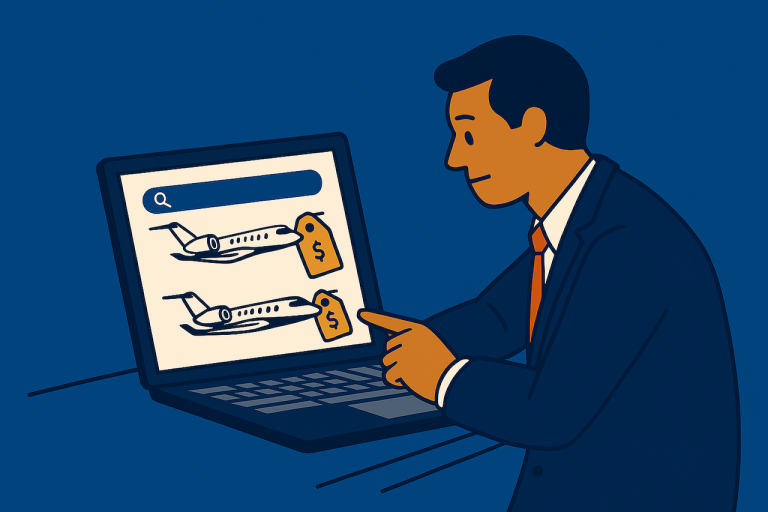
You need more time. That’s the real reason business owners turn to private aviation.
Not to show off. Not because of some lifestyle dream. You’re running a company with multiple locations, trying to visit clients across three states, and racing home to tuck your kids into bed before 8 PM. Commercial airlines decide when you leave, where you connect, and when you arrive. Private aviation hands that control back to you.
Here’s what actually matters when you’re evaluating aircraft ownership, fractional programs, or charter options for your business.
The Time Math That Changes Everything
Commercial airlines operate through hub systems. If you’re based in Henderson and need to reach Des Moines, you’re driving to the airport, flying to a hub, transferring planes, and finally arriving at your destination. Add two hours before departure for security and check-in.
Private aviation removes that entire chain.
You drive to Henderson Executive Airport, walk directly to your aircraft, and fly nonstop to Des Moines. The flight leaves when you’re ready. The U.S. has roughly 5,000 airports. Commercial carriers use about 500 of them. That means private aircraft can land at smaller airports much closer to your actual destination.
Real Numbers From Actual Operations
A group of farmers in California needed to travel from Palm Springs to the Central Valley regularly. No direct airline service existed. Their only option was flying Palm Springs to LAX, changing planes, flying to Bakersfield or Fresno, then driving to their farmland location.
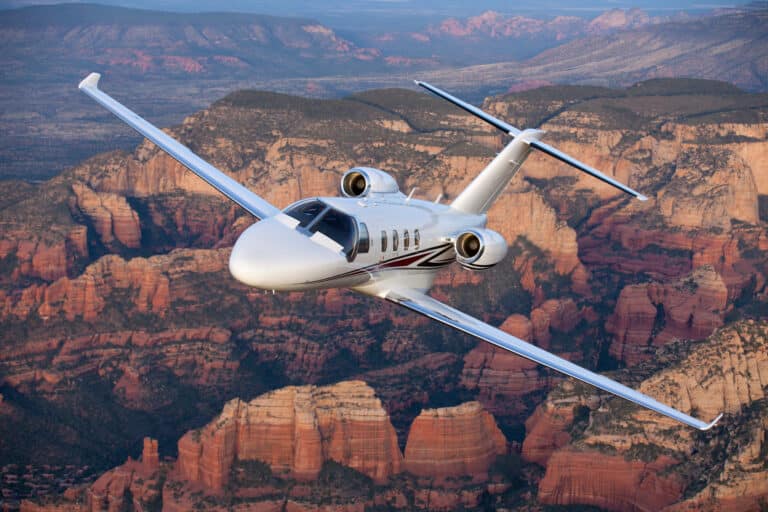
Before they started chartering a Citation jet, the trip took three days. Day one for travel, overnight stay, day two for work, day three to return home.
After chartering: one-hour flight in the morning, full work day on site, home for dinner that night.
The charter cost was $7,000 to $8,000 round trip for seven people. Compare that to seven hotel rooms across two nights, plus three days of those team members away from their primary responsibilities.
The time savings weren’t just convenient. They fundamentally changed how the business could operate.
How You Can Use Private Aviation
You don’t need to buy a $5 million jet tomorrow. Several entry points exist depending on your travel patterns and business needs.
Charter Flights
Pay per flight. No ownership responsibilities. You call when you need an aircraft, specify your route and timing, and the charter company handles everything. Best for occasional users who fly fewer than 50 hours annually.
Fractional Ownership
Companies like NetJets and Flexjet sell shares of aircraft. You own a percentage, they manage everything else. Pilots, maintenance, scheduling, insurance. You get the tax benefits of ownership (bonus depreciation on your purchase amount) without building a flight department.
Fractional programs typically require a few hours of advance notice. Holiday periods like the day after Christmas may have limited availability. For most business travel planned days or weeks ahead, availability isn’t an issue.
Co-Ownership Partnerships
Two or three businesses split the acquisition cost and operating expenses of a single aircraft. Each company gets dedicated hours. One business might use 150 hours annually, another uses 200 hours. You share costs proportionally.
Whole Aircraft Ownership
You buy the aircraft outright. You either hire your own flight department with pilots and maintenance staff, or you operate as an owner-pilot if you have the ratings and training.
Whole ownership makes financial sense around 400 hours of annual usage. That’s roughly two flights per week. Below that threshold, fractional or partnership models usually offer better economics.
Dry Lease Arrangements
Some owners purchase an aircraft for their 250 hours of annual needs, then dry lease 100 to 150 hours to other businesses in their community with similar travel requirements. This reduces your effective operating costs while maintaining primary access to the aircraft.
Owner-Operator vs. Managed Operations
Two profiles dominate private aircraft ownership.
The first is the owner-operator. You’re a business owner who’s also a pilot, or you’re willing to pursue the training and ratings needed to fly your company aircraft. You handle some or all of the flying yourself. This combines your business tool with a personal aviation passion.
The second is the managed operation. You view the aircraft purely as business infrastructure. You hire professional pilots, build a flight department, and treat it like any other company asset. The value comes from what the tool enables, not from flying it yourself.
Tax Benefits That Actually Work
The One Big Beautiful Bill passed in July 2025 restored bonus depreciation for business aircraft. If your company is profitable and you’re facing a significant tax bill, aircraft ownership creates a legitimate deduction strategy.
Purchase a $2 million to $5 million business jet, and you can depreciate the entire amount in your first year of ownership. Two requirements apply. The aircraft must be used for business purposes. You must put it into service by December 31st of the purchase year, which means completing at least one business flight before year-end.
This isn’t a loophole. It’s designed to incentivize businesses to invest in productive assets rather than simply paying taxes on profit.
Many business owners face this decision every year. You’re looking at a substantial tax liability. You can pay Uncle Sam, or you can deploy that capital into an asset that expands your company’s capabilities while reducing your tax burden.
Aircraft ownership does both.
The Real Operating Costs
Acquisition price is only part of the equation. Operating costs run separately and continuously.
A smaller jet costs approximately $400,000 to $500,000 annually to operate. That includes fuel, insurance, hangar fees, maintenance reserves, crew salaries if you’re not flying it yourself, and regulatory compliance.
Super-midsize and heavy jets like Gulfstreams or Challengers run $2 million to $3 million per year in operating costs.
These aren’t trivial expenses. Any broker who doesn’t discuss operating costs upfront is setting you up for buyer’s remorse. Plenty of aircraft get purchased by enthusiastic buyers who aren’t prepared for the ongoing financial commitment. Shock sets in six months later. They sell the aircraft and never return to business aviation.
That’s avoidable with honest education before purchase.
Safety: The Overlooked Advantage
The Department of Transportation publishes data confirming that flying in a private jet is hundreds of times safer than driving a car.
Here’s why. Pilots go through extensive training, background checks, and drug testing. If you’re a captain on a private jet, you attend simulator training every six months. You’re tested on emergency procedures, normal operations, system failures, and decision-making under pressure.
Compare that to drivers. Someone gets a license at 16, drives for 40 years with no retesting, no ongoing training, no verification of skill maintenance. You don’t know if the person two feet away going 70 miles per hour is sober, alert, or competent.
When you’re flying at altitude, the nearest aircraft is three miles away. Onboard technology shows you where other traffic is, where terrain rises, and where weather systems are developing.
Private aircraft adopt new technology faster than commercial fleets. The 2005 Cirrus SR20, a single-engine piston aircraft, had an Avidyne system superior to most regional jet avionics of that era. That’s because updating a commercial fleet requires FAA approval across hundreds of aircraft and years of implementation timelines. Private aviation moves faster.
Altitude and Turbulence Management
Most private jets have service ceilings between 45,000 and 51,000 feet. Commercial airliners typically fly in the high 30s.
That altitude difference matters. Less air traffic at 45,000 feet means more flexibility for your crew to request altitude changes when turbulence appears. There’s simply smoother air up higher.
Airline pilots often fly at altitudes dictated by dispatch for fuel optimization and routing efficiency. Some will request changes for passenger comfort. Others won’t. You’re flying at whatever altitude dispatch assigned.
Corporate flight crews make continuous micro-decisions around passenger comfort. Temperature adjustments, altitude changes for smoother rides, timing decisions around weather systems. The entire operation centers on optimizing your experience.
Confidentiality and Corporate Security
Sit on a commercial flight and listen. You’ll hear business conversations happening two rows ahead. Strategy discussions. Client negotiations. Financial details.
You have no idea who else is on that aircraft. Competitors could be sitting three seats back. Journalists. Industry analysts. Anyone.
Private aviation eliminates that exposure. Your team can hold confidential meetings at 41,000 feet without worrying about information leaks. If you’re planning an IPO, negotiating an acquisition, or discussing proprietary business strategy, those conversations stay contained.
Connectivity helps too. Most private jets now have Starlink or comparable Wi-Fi systems, plus satellite phones. Your team can coordinate with ground operations in real time without compromising security.
Flight Tracking and Privacy
Some operators don’t hide where they fly. Every trip becomes visible on tracking platforms like FlightAware.
Smart operators use tools to mask aircraft movements. You can block tail numbers, operate under commercial call signs, or use third-party structures to obscure ownership. If you’re conducting sensitive business, your competition doesn’t need to know you flew to their city three times last month.
The Operational Reality: Family Travel and Logistics
Try flying commercial with a 10-month-old and a three-year-old. You’re packing bags, car seats, strollers, and diaper supplies. You’re driving to the airport, finding parking, navigating security with children, and hoping your flight isn’t delayed during nap time.
Now imagine this scenario. You drive directly to the FBO (fixed-base operator) at your local airport. You dial the call box at the gate. They buzz you through. You park next to your aircraft.
Ground personnel and flight crew help you load luggage. They assist you and your children onto the aircraft. If someone needs a bathroom break, you pause. If your daughter wants popcorn from the FBO lobby, you go inside and get popcorn.
Everything operates on your timeline. No frantic rushing. No public meltdowns in crowded terminals. No sitting on the floor because every seat is taken and your flight is delayed 90 minutes.
The convenience extends beyond families. If you’re traveling with a team, you can hold working meetings on the aircraft. Review presentations. Make strategy decisions. Arrive at your destination already aligned and ready to execute.
When Private Aviation Makes Business Sense
An automotive manufacturing company had assembly lines at multiple facilities across the U.S. When a line went down, production stopped. Every minute cost money.
They maintained one specialized repair crew in Detroit. If a line failed in the Southeast, they needed that crew on-site immediately. Not tomorrow. Not in six hours after connecting through Charlotte. Immediately.
They owned a fleet of jets specifically for this operational requirement.
Most businesses don’t need that level of responsiveness. But plenty of companies operate across distributed locations where efficient travel becomes critical to growth.
One client started with six locations in the Southeast. The company expanded to 17 locations. Their headquarters sat in a small Arkansas town with limited airline access. Running 17 locations from that base without a private jet wasn’t realistic. The aircraft enabled the expansion.
Geographic and Accessibility Factors
If you’re based somewhere with poor airline connectivity, private aviation changes what’s possible for your business. Places with no commercial service at all. Small regional airports where the only option is driving 90 minutes to a hub airport.
Private aviation removes those constraints. You’re no longer limited by airline route maps.
Some businesses simply can’t function efficiently without direct air access. Others find that the time savings and scheduling flexibility create competitive advantages their rivals can’t match.
The Humanitarian Side Nobody Talks About
When Haiti experienced a natural disaster, private aircraft owners flew repeated relief missions. Supplies down, evacuees back.
A client regularly flew lumber to Ensenada because he was building an orphanage. Another client had a PC-12 capable of landing on dirt strips. When heavy rains washed out roads to a small town on the Baja Peninsula, he flew in water and canned food supplies until ground access was restored.
Private aviation provides unique disaster response capabilities. Aircraft can reach places ground vehicles can’t access. They can land on unimproved surfaces. They can operate when commercial infrastructure is overwhelmed.
This isn’t the glamorous image of private jets. It’s the reality of how many owners use their aircraft when communities need help.
Making the Decision: Education Over Sales
A legitimate aviation consultant provides education before recommendations. You need to understand operating costs, usage requirements, tax implications, and operational realities before you commit.
Some brokers just want to close transactions. They’ll sell you an aircraft regardless of whether it fits your situation. You’ll discover the operating costs six months later. By then you’re committed to an asset that doesn’t make sense for your business.
The right approach starts with a strategy call. What does your business actually need? How many hours will you fly annually? What routes matter most? Do you have team members traveling together regularly? What’s your budget for both acquisition and operations?
If you’re not ready for whole ownership, fractional might work. If you’re not ready for fractional, charter builds experience while you evaluate whether private aviation fits your company’s growth trajectory.
Many clients spend years considering aircraft ownership before they’re ready. That’s fine. You want to understand the landscape so when the timing aligns with your business needs, you can move decisively.
The Ten-Year Timeline Pattern
A common scenario: business owners spend a decade building their company with aircraft ownership as a goal. They reach a point where the business can support it, and they’re ready to execute.
Sometimes a partnership makes sense initially. Whole ownership might require 400 hours of annual usage, but you’re only flying 200 hours in your first year. Find another business with similar needs, split the aircraft, and reduce your effective costs.
After two years of growth, maybe you’re ready for whole ownership. The aircraft supported business expansion that generated the revenue to justify sole ownership.
Success Pattern vs. Failure Pattern
Educated buyers who understand costs and operational requirements don’t regret aircraft ownership. They consistently expand their use of business aviation because the tool proves its value.
Unprepared buyers get shocked by operating costs they didn’t anticipate. They exit quickly and never come back.
The difference is education upfront. Understanding what you’re committing to before you sign the purchase agreement.
Frequently Asked Questions
How many hours of annual flying justify private aircraft ownership?
Whole aircraft ownership typically makes financial sense around 400 hours per year. That translates to roughly two flights weekly. Below 200 hours annually, charter or fractional ownership usually provides better economics. Between 200 and 400 hours, co-ownership with one or two partners can work well. The calculation includes both acquisition costs and operating expenses, which range from $400,000 to $3 million annually depending on aircraft size.
Can I really depreciate the entire purchase price in the first year?
Yes, under the bonus depreciation rules restored by the One Big Beautiful Bill in July 2025. Requirements are straightforward. The aircraft must be used for business purposes, and you must put it into service by December 31st of the purchase year. That means completing at least one business flight before year-end. This applies to both whole aircraft purchases and fractional ownership shares. You depreciate the amount you actually purchased.
What are the actual operating costs beyond the purchase price?
Smaller jets cost approximately $400,000 to $500,000 annually to operate. Super-midsize and heavy jets like Gulfstreams or Challengers run $2 million to $3 million per year. These costs include fuel, insurance, hangar fees, maintenance reserves, crew salaries, and regulatory compliance. Any consultant who doesn’t discuss operating costs upfront is doing you a disservice. These ongoing expenses are substantial and need to be part of your decision framework.
How does fractional ownership differ from whole ownership?
Fractional ownership means you purchase a percentage of an aircraft managed by companies like NetJets or Flexjet. They handle pilots, maintenance, scheduling, and operations. You get access to aircraft with advance notice, typically a few hours. You receive tax benefits on your purchase amount. Whole ownership means you buy the entire aircraft and either hire your own flight department or fly it yourself as an owner-operator. You have complete control over scheduling and operations but assume full responsibility for costs and management.
Is private aviation actually safer than commercial airlines?
Private jet travel is hundreds of times safer than driving, according to Department of Transportation data. Pilots undergo extensive training, background checks, and drug testing. Captains attend simulator training every six months, testing emergency procedures and systems management. Aircraft are maintained to strict regulatory standards. The technology in private jets often exceeds commercial aircraft, with systems showing traffic, terrain, and weather in real time. The safety record of business aviation is exceptional.
How far in advance do I need to schedule flights with fractional ownership?
Most fractional programs need a few hours of advance notice under normal circumstances. Holiday periods like the day after Christmas may require four to eight hours notice instead of the usual timeframe. For business travel planned days or weeks ahead, availability isn’t an issue. Very few businesses need to dispatch somewhere within two hours. Most travel happens on timelines of tomorrow or next week, which fractional programs accommodate easily.
Can I keep my travel confidential with private aviation?
Yes, but you need to work with operators who understand privacy. Some operators don’t hide flight data, making every trip visible on tracking platforms. Smart operators use tail number blocking, commercial call signs, or third-party operational structures to mask aircraft movements. If you’re conducting sensitive business like IPO preparations or acquisition negotiations, these privacy tools prevent competitors from tracking where you’re flying.
How do I know if my business is ready for aircraft ownership?
Start with a strategy consultation. Evaluate your annual travel hours, typical routes, team size for trips, and both acquisition and operating budget. If you’re flying 400+ hours annually with multiple team members traveling together regularly, whole ownership may make sense. Between 200-400 hours, consider co-ownership. Below 200 hours, fractional ownership or charter likely provides better value. The right advisor will tell you honestly whether ownership fits your situation rather than just trying to sell you an aircraft.
What happens to the aircraft when I’m not using it?
If you own the aircraft outright but only use 200-250 hours annually, you can dry lease unused hours to other businesses. This reduces your effective operating costs while maintaining primary access. The aircraft stays available for your needs first. Another business uses it during your downtime. Some owners structure arrangements where they lease 100-150 hours annually to one or two companies with compatible schedules.
Can I fly the aircraft myself as an owner-operator?
Yes, if you have or obtain the necessary ratings and training. Many business owners who are also pilots pursue this path. You’ll need the appropriate license, type ratings for your specific aircraft, and recurrent training every six months. Owner-operators often describe this as combining two passions into one tool. You’re building your business and flying your company aircraft. Others prefer to hire professional pilots and focus entirely on business operations. Both models work depending on your interests and qualifications.
Key Takeaways
Time savings drive private aviation decisions. You’re not buying luxury. You’re buying direct routing to 5,000 airports instead of 500 airline hubs, elimination of connections and security delays, and control over your departure schedule. Real-world example: three-day trips compressed to same-day operations.
Multiple entry points exist beyond whole ownership. Charter for occasional use, fractional for turnkey managed service, co-ownership to split costs with partners, or dry lease to reduce expenses. Match the model to your annual usage and business needs.
Tax benefits create acquisition leverage. Bonus depreciation lets you write off the full purchase price in year one for qualifying business aircraft. Requirements: business use and one flight completed by December 31st. Applies to whole purchases and fractional shares.
Operating costs require separate planning. Expect $400,000 to $500,000 annually for smaller jets, $2 million to $3 million for larger aircraft. Factor these ongoing expenses into your decision before acquisition. Unprepared buyers exit the industry quickly. Educated buyers consistently expand their aviation use.
Safety advantages exceed commercial aviation in many metrics. Pilots train every six months in simulators, aircraft technology updates faster than commercial fleets, and you’re three miles from the nearest aircraft instead of two feet from the next car. Statistical data confirms private aviation’s exceptional safety record.
Confidentiality matters for sensitive business operations. Commercial flights expose strategy discussions to unknown passengers. Private cabins contain confidential meetings. Smart operators mask flight tracking to prevent competitors from monitoring your travel patterns.
Operational convenience extends beyond the flight itself. Drive directly to your aircraft, schedule around family needs, adjust departure times for last-minute requirements, and work with flight crews focused entirely on optimizing your experience. The entire system operates on your timeline.