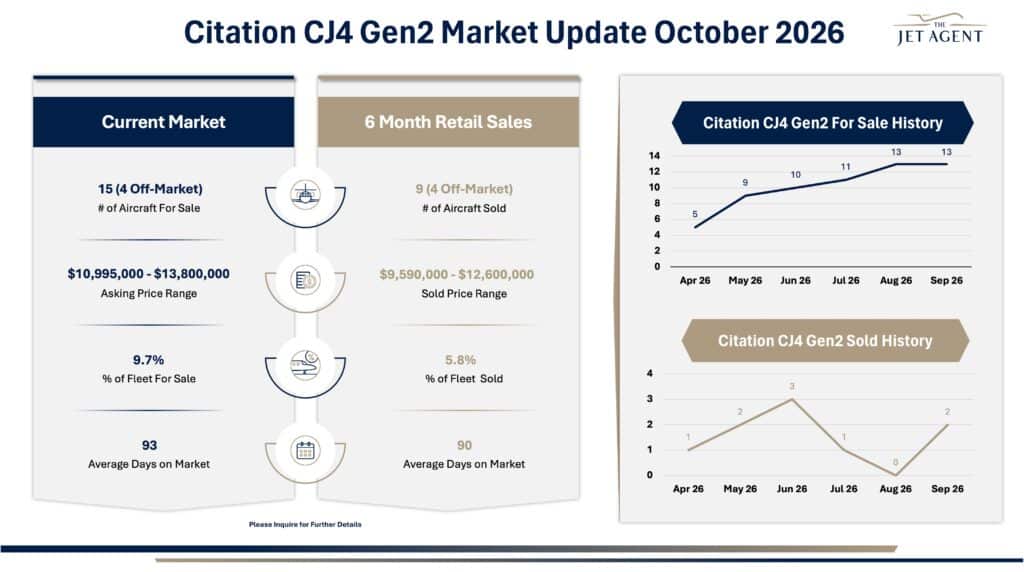
The Citation CJ4 Gen2 market enters October with growing inventory and relatively modest transaction activity. Currently, 15 aircraft are available for sale, representing 9.7% of the fleet, while nine retail transactions have been recorded over the past six months. Inventory has increased steadily throughout the reporting period, suggesting that new listings are entering the market faster than buyers are absorbing them. Although September brought a welcome improvement in sales activity following a quiet August, the expanding selection of available aircraft is creating a more competitive environment for sellers. Pricing, aircraft condition, and maintenance program coverage will remain important factors in attracting buyers as we move into the fourth quarter.
Fleet Size and Availability
The CJ4 Gen2 market currently has 15 aircraft available for sale, including four off-market offerings, representing 9.7% of the fleet.
Inventory has increased considerably throughout the reporting period, beginning with just five aircraft in April before climbing to nine in May, ten in June, and eleven in July. Availability reached 13 aircraft in August and remained at that level through September.
This sustained increase in inventory is worth watching, particularly for a relatively young aircraft fleet. With nearly 10% of the fleet currently available, buyers have a growing selection of aircraft to consider, while sellers face increased competition from comparable listings.
Market Listings
If you are selling a CJ4 Gen2, the question is what supports your asking price. Current asks range from $10.995 million to $13.8 million, while reported sales over the past six months topped out at $12.6 million. An aircraft priced above that level needs a clear reason for the premium, whether that is lower time, desirable equipment, or a stronger maintenance position. Buyers should compare those differences directly rather than assume every seller’s premium is justified.
Sold aircraft averaged 90 days on market, while current listings have already accumulated an average of 93 days—and are still available. That does not mean they are overdue to sell, but it gives sellers a useful checkpoint: if your aircraft is not generating serious interest after several months, reassess its price and how it compares with the alternatives buyers are considering.
Sales Activity
Over the past six months, nine CJ4 Gen2 aircraft have sold, representing 5.8% of the fleet.
Monthly transaction activity included one sale in April, two in May, three in June, one in July, no sales in August, and two in September.
June was the strongest month of the reporting period, while August marked a temporary pause in completed transactions. September’s two sales represent an encouraging improvement, although overall transaction volume remains relatively modest compared with the growing number of aircraft available.
With current inventory exceeding six-month sales volume, the market is showing signs of a supply-demand imbalance that could create additional pricing pressure if availability continues to increase.
Key Takeaways
• 15 aircraft are currently available, including four off-market offerings.
• Available inventory represents 9.7% of the fleet.
• Historical inventory increased from five aircraft in April to 13 in September.
• Current asking prices range from $10.995 million to $13.8 million.
• Nine aircraft sold over the past six months, representing 5.8% of the fleet.
• Completed transactions ranged from $9.59 million to $12.6 million.
• Active listings average 93 days on market, compared with 90 days for completed sales.
• September recorded two transactions following no completed sales in August.
Key Insight
CJ4 Gen2 sellers can no longer count on scarcity to bring buyers to their aircraft. Current availability has reached 15 aircraft, compared with five in April, while nine sold over the past six months. September’s two sales show that buyers are participating, but the expanding selection gives them more freedom to pass on an aircraft whose price or specifications do not measure up.
For sellers, the important comparison is with the aircraft a buyer could purchase instead. Desirable equipment, lower time, and attractive cosmetics can support a premium, but those advantages need to be clear. If competing aircraft offer a similar ownership proposition for less, additional market exposure is unlikely to close the gap.
For buyers, this is a better shopping environment than it was in the spring. There is more room to compare aircraft and negotiate, particularly where several listings meet the same requirements. Use that choice to evaluate the total investment: a lower purchase price can lose its appeal once maintenance exposure, program enrollment, or equipment needs are accounted for.
The market has shifted toward buyers, and sellers who recognize that early have a better chance of closing before their aircraft becomes another long-standing listing.